News
- Home /
- News

NetChain: Scale-free sub-RTT coordination
NetChain won a best paper award at NSDI 2018 earlier this month. By thinking outside of the box (in this case, the box is the chassis containing the server), Jin et al. have demonstrated how to build a coordination service (think Apache ZooKeeper) with incredibly low latency and high throughput.
Read More
NASA green lights self-assembling space telescope
His idea involves programming thousands of individual hexagon-shaped modules, each 1 meter across and topped with an edge-to-edge active (adjustable) mirror assembly. These would form the primary and secondary mirrors.
Read More


China is monitoring employees’ brain waves and emotions
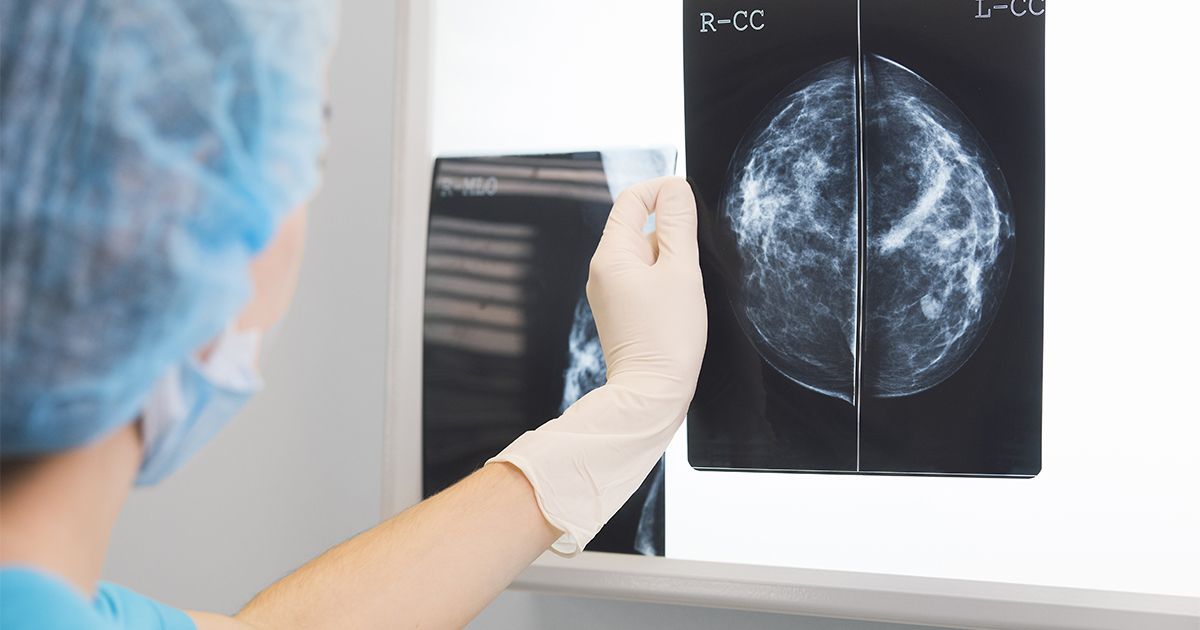
Chinese businesses and the military are monitoring employees’ brain activity and emotions. The ’emotional surveillance technology’ helps employers identify mood shifts so they can change break times, an employee’s task, or even send them home. The technology reportedly increases productivity and profitability, with one company claiming its profits jumped by $315 million.
Read More
Tesla Doesn’t Burn Fuel, It Burns Cash
Tesla is going through money so fast that, without additional financing, there is now a genuine risk that the 15-year-old company could run out of cash in 2018. The company burns through more than $6,500 every minute, according to data compiled by Bloomberg. Free cash flow—the amount of cash a company generates after accounting for capital expenditures—has been negative for five consecutive quarters.
Read More
Lessons from Building Static Analysis Tools at Google
Here, we describe how we have applied the lessons from Google’s previous experience with FindBugs Java analysis, as well as from the academic literature, to build a successful static analysis infrastructure used daily by most software engineers at Google. Google’s tooling detects thousands of problems per day that are fixed by engineers, by their own choice, before the problematic code is checked into Google’s companywide codebase.
Read More

Categories
Tags
- 3dprinting
- 5g
- Agent
- Agentic
- Ai
- Alexa
- Algorithm
- Amazon
- Ambassador
- Ansible
- Anthropic
- Api
- Apple
- Appmesh
- Appswitch
- Argo
- Art
- Artificialintelligence
- Astronomy
- Augmentedreality
- Aurora
- Australia
- Authentication
- Automation
- Aws
- Azure
- Bayesian
- Bgp
- Bigdata
- Bioengineering
- Biology
- Biotech
- Blackhole
- Blockchain
- Brain
- Build
- Buildah
- Business
- Cancer
- Casestudy
- China
- Chip
- Cia
- Cicd
- Cilium
- Climatechange
- Cloud
- Cloudflare
- Cloudnative
- Cncf
- Codeanalysis
- Computing
- Connectedcars
- Consul
- Container
- Coredns
- Creativity
- Crio
- Crispr
- Cubesat
- Culture
- Dashboard
- Data
- Database
- Datacenter
- Datadog
- Datascience
- Dataset
- Deeplearning
- Deepmind
- Developer
- Development
- Devops
- Digitalcurrency
- Dna
- Dns
- Docker
- Drone
- Ec2
- Economy
- Education
- Einstein
- Eks
- Elasticsearch
- Electricvehicle
- Emdrive
- Energy
- Engineering
- Envoy
- Erlang
- Esa
- Facialrecognition
- Fail
- Falco
- Fashion
- Fda
- Federation
- Fitnessfunction
- Flair
- Fluentd
- Flutter
- Flyingcars
- Food
- Funny
- Gaia
- Gcp
- Gdpr
- Genome
- Geography
- Geopolitics
- Gis
- Git
- Github
- Gitlab
- Gitops
- Gloo
- Go
- Gps
- Grafana
- Graphene
- Graphql
- Grpc
- Hashicorp
- Health
- Healthcare
- Helm
- Hft
- Highavailability
- History
- Http
- Hurricane
- Hyperloop
- Iac
- Ibm
- Image
- Imagerecognition
- Ingress
- Innovation
- Intel
- Ios
- Iot
- Istio
- Jaeger
- Jenkins
- Julia
- Kafka
- Keras
- Kiali
- Kitesurf
- Knative
- Kubedb
- Kubeedge
- Kubernetes
- Lambda
- Latinamerica
- Legal
- Lidar
- Linkerd
- Linux
- Llm
- Lyft
- M3
- Machinelearning
- Mars
- Math
- Mcp
- Microservices
- Microsoft
- Mobile
- Mongo
- Monitoring
- Moon
- Multicloud
- Multicluster
- Mysql
- Nanorobot
- Nasa
- Nature
- Navigation
- Network
- Networking
- Newrelic
- News
- Nextjs
- Nlp
- Nlu
- Observability
- Onnx
- Onpremise
- Opencensus
- Openmetrics
- Opentracing
- Openwhisk
- Operator
- Opinion
- Outage
- Perforce
- Performance
- Pharma
- Philosophy
- Physics
- Podman
- Postgres
- Pprof
- Presto
- Privacy
- Programming
- Prometheus
- Protocol
- Psychology
- Python
- Pytorch
- Qa
- Quantum
- Quantumcomputing
- Qubit
- React
- Recycling
- Redis
- Release
- Renewable
- Research
- Resilience
- Rnn
- Robot
- Rook
- Scalability
- Scaling
- Science
- Secrets
- Security
- Selfdrivingcars
- Sentry
- Serverless
- Servicemesh
- Slack
- Smartgrid
- Smi
- Sociology
- Space
- Spacex
- Spacy
- Spark
- Spinnaker
- Sql
- Squash
- Sre
- Startup
- Storage
- Study
- Success
- Swift
- Sysdig
- Tailwind
- Technology
- Tensorflow
- Terraform
- Tesla
- Testcategory1
- Textclassification
- Traefik
- Training
- Transportation
- Troubleshooting
- Uber
- Ubi
- Vault
- Velero
- Versioncontrol
- Video
- Virtualreality
- Vision
- Visualization
- Vitess
- Warfare
- Wd
- Web
- Weird
- Wikipedia