News
- Home /
- News

So what’s new in AI?
I graduated with a degree in AI when the cost of the equivalent computational power to an iPhone was $50 million. A lot has changed but surprisingly much is still the same.
Read More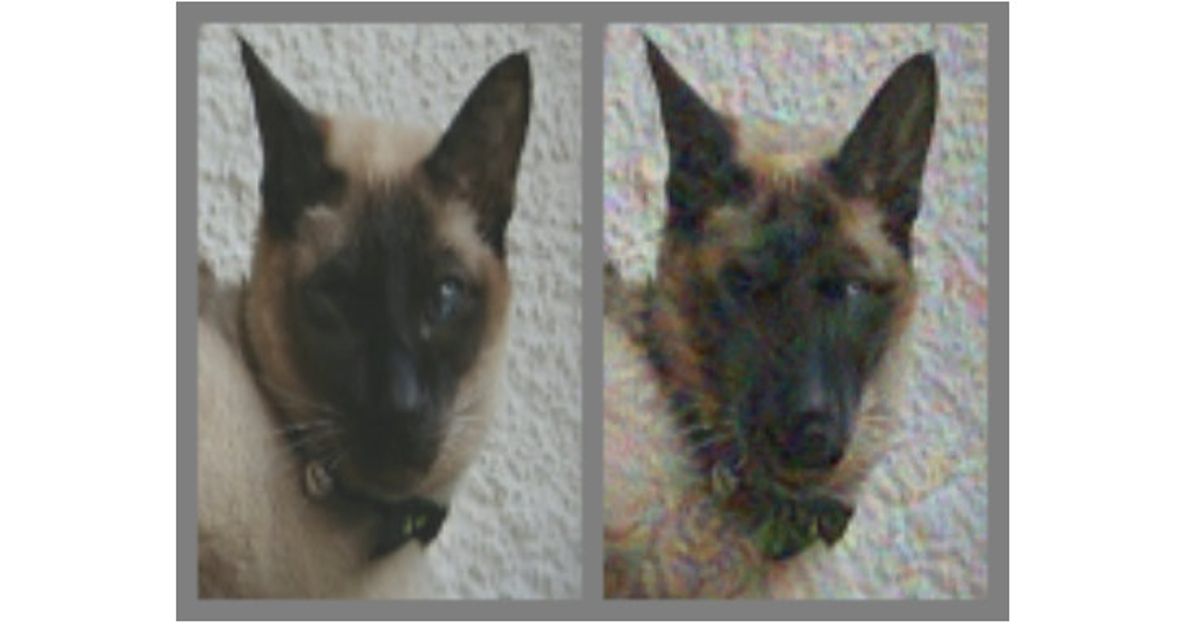
Hacking the Brain with Adversarial Images
This is an example of what’s called an adversarial image: an image specifically designed to fool neural networks into making an incorrect determination about what they’re looking at. Researchers at Google Brain decided to try and figure out whether the same techniques that fool artificial neural networks can also fool the biological neural networks inside of our heads, by developing adversarial images capable of making both computers and humans think that they’re looking at something they aren’t.
Read More
DNA Sheds Light On Settlement of Pacific
Two genetic studies shed light on the epic journeys that led to the settlement of the vast Pacific region by humans.
Read More
The Bayesian Probability Puzzle Solution
When making hard decisions, do you go with your gut or try to calculate the risks? In many cases going with your gut is fine, but the answers to our February puzzle problems show how explicit probabilistic thinking can outperform intuitive estimates. They also highlight the differences between situations where an intuitive approach succeeds and ones where it fails.
Read More
Philosophical intuition: just what is ‘a priori’ justification?
Philosophers use the term ‘intuition’ in a slightly different sense than it is used in everyday discourse. Generally speaking, the difference is that philosophical intuitions are based solely on understanding a proposition, while non-philosophical intuitions are not. If a proposition seems true to you simply on the basis of your understanding of it, and not on the basis of empirical evidence, testimony, memory or reasoning, then you are having an intuition in a philosophical sense that it is true.
Read More
Paul Allen Wants to Teach Machines Common Sense
The Microsoft co-founder will give $125 million to his nonprofit research lab to help develop technology that adds common sense to artificial intelligence.
Read More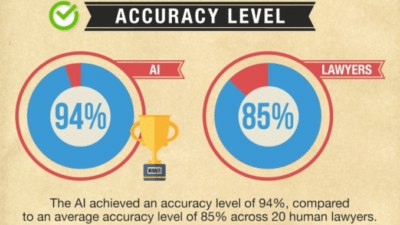
Machines Stomp Lawyers in Legalese Smackdown
Cue the sad tuba and attorney jokes: Machines just landed the hurt on lawyers. LawGeex, an Israel-based startup focused on automating contract reviews, released a study showing its AI software pummels lawyers in document review accuracy. The AI service outperformed 20 corporate lawyers at identifying legal risks in nondisclosure agreement contracts.
Read More


The Costly Fiasco of Minnesota’s Licensing and Registration System
How long should a state take to develop an information system to manage its vehicle and driver services’ transactions? For Minnesota, the wish is that it is only going to be the 11 years it is now scheduled to take.
Read MoreCategories
Tags
- 3dprinting
- 5g
- Ai
- Alexa
- Algorithm
- Amazon
- Ambassador
- Ansible
- Api
- Apple
- Appmesh
- Appswitch
- Argo
- Art
- Artificialintelligence
- Astronomy
- Augmentedreality
- Aurora
- Australia
- Authentication
- Automation
- Aws
- Azure
- Bayesian
- Bgp
- Bigdata
- Bioengineering
- Biology
- Blackhole
- Blockchain
- Brain
- Build
- Buildah
- Business
- Cancer
- Casestudy
- China
- Chip
- Cia
- Cicd
- Cilium
- Climatechange
- Cloud
- Cloudnative
- Cncf
- Codeanalysis
- Computing
- Connectedcars
- Consul
- Container
- Coredns
- Creativity
- Crio
- Crispr
- Cubesat
- Culture
- Dashboard
- Data
- Database
- Datacenter
- Datadog
- Datascience
- Dataset
- Deeplearning
- Deepmind
- Developer
- Development
- Devops
- Digitalcurrency
- Dna
- Dns
- Docker
- Drone
- Ec2
- Economy
- Education
- Einstein
- Eks
- Elasticsearch
- Electricvehicle
- Emdrive
- Energy
- Engineering
- Envoy
- Erlang
- Esa
- Facialrecognition
- Fail
- Falco
- Fashion
- Fda
- Federation
- Fitnessfunction
- Flair
- Fluentd
- Flutter
- Flyingcars
- Food
- Funny
- Gaia
- Gcp
- Gdpr
- Genome
- Geography
- Geopolitics
- Gis
- Git
- Github
- Gitlab
- Gitops
- Gloo
- Go
- Gps
- Grafana
- Graphene
- Graphql
- Grpc
- Hashicorp
- Health
- Healthcare
- Helm
- Hft
- Highavailability
- History
- Hurricane
- Hyperloop
- Iac
- Ibm
- Image
- Imagerecognition
- Ingress
- Innovation
- Intel
- Ios
- Iot
- Istio
- Jaeger
- Jenkins
- Kafka
- Keras
- Kiali
- Knative
- Kubedb
- Kubeedge
- Kubernetes
- Lambda
- Latinamerica
- Legal
- Lidar
- Linkerd
- Linux
- Lyft
- M3
- Machinelearning
- Mars
- Math
- Microservices
- Microsoft
- Mobile
- Mongo
- Monitoring
- Moon
- Multicloud
- Multicluster
- Mysql
- Nanorobot
- Nasa
- Nature
- Navigation
- Network
- Networking
- Newrelic
- News
- Nextjs
- Nlp
- Nlu
- Observability
- Onnx
- Onpremise
- Opencensus
- Openmetrics
- Opentracing
- Openwhisk
- Operator
- Opinion
- Outage
- Perforce
- Performance
- Pharma
- Philosophy
- Physics
- Podman
- Postgres
- Pprof
- Presto
- Privacy
- Programming
- Prometheus
- Protocol
- Psychology
- Python
- Pytorch
- Qa
- Quantum
- Quantumcomputing
- Qubit
- React
- Recycling
- Redis
- Release
- Renewable
- Research
- Resilience
- Rnn
- Robot
- Rook
- Scalability
- Scaling
- Science
- Secrets
- Security
- Selfdrivingcars
- Sentry
- Serverless
- Servicemesh
- Slack
- Smartgrid
- Smi
- Sociology
- Space
- Spacex
- Spacy
- Spark
- Spinnaker
- Sql
- Squash
- Sre
- Startup
- Storage
- Study
- Success
- Swift
- Sysdig
- Tailwind
- Technology
- Tensorflow
- Terraform
- Tesla
- Testcategory1
- Textclassification
- Traefik
- Training
- Transportation
- Troubleshooting
- Uber
- Ubi
- Vault
- Velero
- Versioncontrol
- Video
- Virtualreality
- Vision
- Visualization
- Vitess
- Warfare
- Wd
- Web
- Weird
- Wikipedia