

Stripe Issuing is now open to all US businesses
Stripe Issuing is an API that allows you to create and control virtual and physical cards. Today, we’re opening access to all businesses in the US, so you can sign up and start creating cards instantly. Now, any US business can instantly launch a commercial card program, right from their Dashboard, at no cost to get started.
Read More

New ways to make vertical farming stack up
Mr Elder is product manager for Intelligent Growth Solutions (IGS), a “vertical farming” company based at Invergowrie, near Dundee, in Scotland. Each of the nine-metre-high towers in the demonstration unit that he runs occupies barely 40 square metres. But by stacking the trays one on top of another an individual tower provides up to 350 square metres of growing area.
Read More
How China Is Cashing in on Group Chats
One sunny afternoon this April, a Chinese teenager nicknamed Gallen was backpacking through Bali, hunting for things to do. But he didn’t turn to TripAdvisor for crowd-sourced suggestions (too time consuming) or scroll through Instagram for local geotags (too imprecise). Instead, Gallen enlisted recommendations from other nearby tourists through a WeChat group chat organized by the online travel provider Ctrip.
Read More
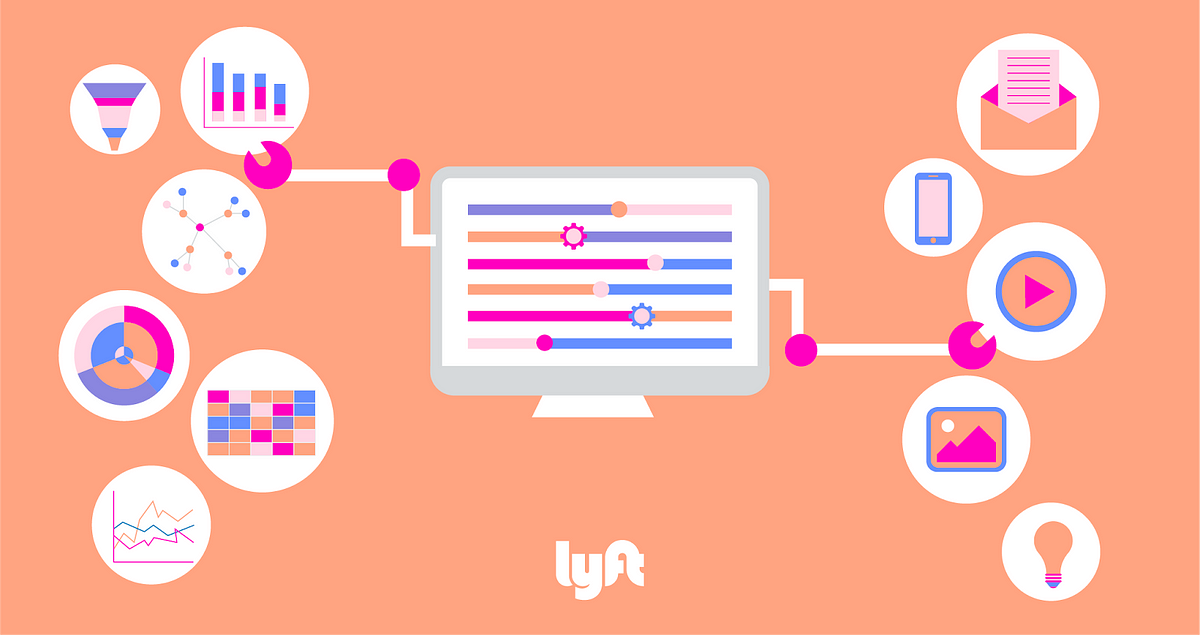
Building Lyft’s Marketing Automation Platform
We take pride in our mission to improve people’s lives with the world’s best transportation. More than 50 million carbon neutral Lyft rides happen every month across the US and Canada—and we’ve barely scratched the surface in the potential for rideshare. Part of our growth is improvements in our acquisition process—like launching region-specific ad campaigns that increase awareness, and consideration of our multi-modal offerings.
Read More

AQR’s Problem With Machine Learning: Cats Morph Into Dogs
Machine learning has done magic, such as beating human chess champions. But in finance, expectations for the technology may need to come down a notch or two, according to quantitative firm AQR. Machine learning changes the way problems are solved.
Read More
Uber’s Path of Destruction
Since it began operations in 2010, Uber has grown to the point where it now collects over $45 billion in gross passenger revenue, and it has seized a major share of the urban car service market. But the widespread belief that it is a highly innovative and successful company has no basis in economic reality. An examination of Uber’s economics suggests that it has no hope of ever earning sustainable urban car service profits in competitive markets.
Read More
The Right Way to Get Your First 1,000 Customers
Thales Teixeira, associate professor at Harvard Business School, believes many startups fail precisely because they try to emulate successful disruptive businesses. He says by focusing too early on technology and scale, entrepreneurs lose out on the learning that comes from serving initial customers with an imperfect product. He shares how Airbnb, Uber, Etsy, and Netflix approached their first 1,000 customers very differently, helping to explain why they have millions of customers today.
Read More
Introducing AresDB: Uber’s GPU-Powered Open Source, Real-time Analytics Engine
At Uber, real-time analytics allow us to attain business insights and operational efficiency, enabling us to make data-driven decisions to improve experiences on the Uber platform. For example, our operations team relies on data to monitor the market health and spot potential issues on our platform; software powered by machine learning models leverages data to predict rider supply and driver demand; and data scientists use data to improve machine learning models for better forecasting. In the past, we have utilized many third-party database solutions for real-time analytics, but none were able to simultaneously address all of our functional, scalability, performance, cost, and operational requirements.
Read More
The math’s not pretty on digital advertising’s future revenues?
How much is Google worth? Today, its market cap—the total value of the company—was just over $690 billion. It is the largest media corporation in the world, earning $79 billion on media revenue out of a total of $90 billion in overall revenue.
Read More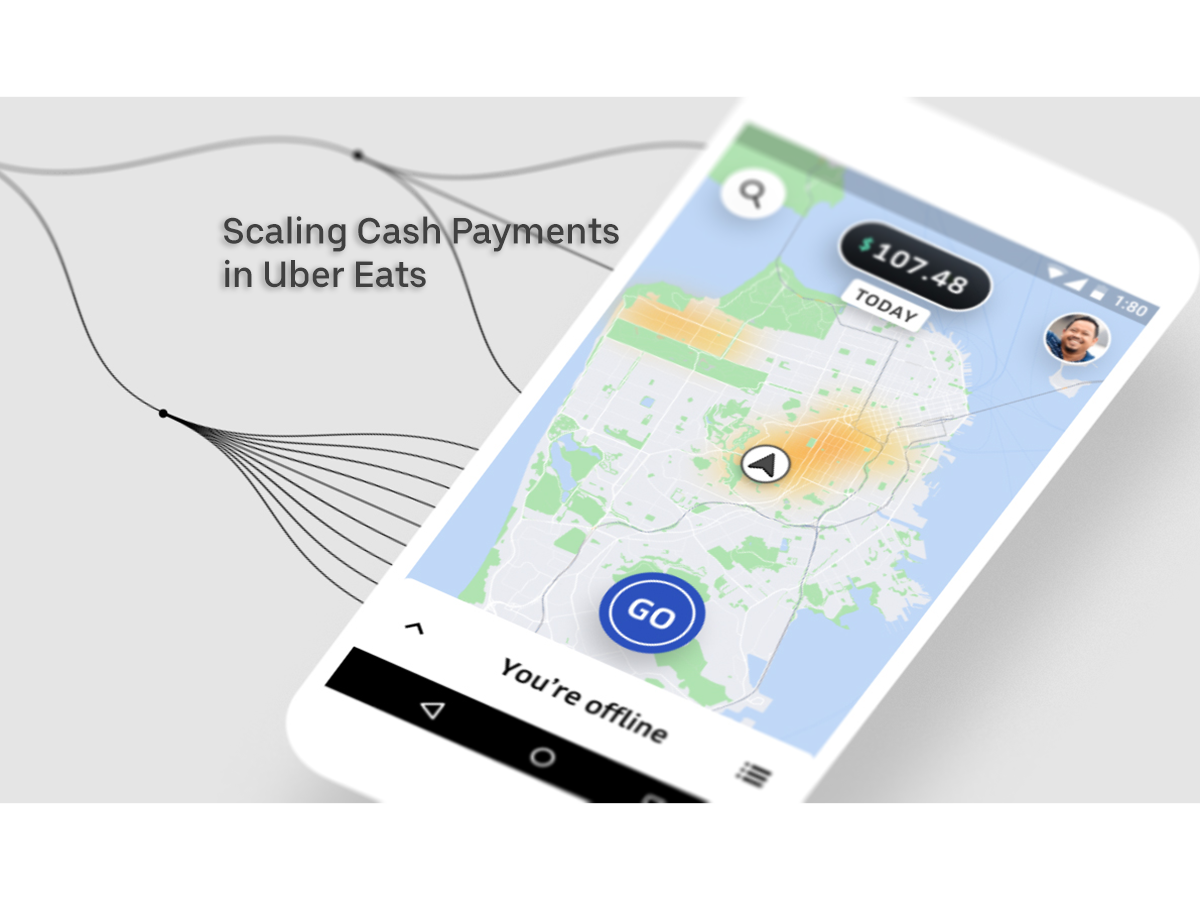
Scaling Cash Payments in Uber Eats
This article is the fourth in a series covering how Uber’s mobile engineering team developed the newest version of our driver app, codenamed Carbon, a core component of our ridesharing business. Among other new features, the app lets our population of over three million driver-partners find fares, get directions, and track their earnings. We began designing the new app in conjunction with feedback from our driver-partners in 2017 and began rolling it out for production in September 2018.
Read More


eBay Moves Away From OpenStack, Embraces Kubernetes and Docker
As part of an initiative to completely revamp its data center infrastructure, eBay is “re-platforming, using Kubernetes and Docker and moving away from OpenStack,” according to a message to SDxCentral from Mazen Rawashdeh, VP of platform engineering at eBay. In May 2017 at the OpenStack Summit in Boston, an eBay executive said that 95 percent of all eBay traffic ran on its OpenStack cloud, which at the time managed 167,000virtual machines(VMs) and 4,000 applications. But since then, eBay has pivoted away from OpenStack as part of a major three-year infrastructure initiative.
Read More
Multi-Cloud Is a Trap
It comes up in a lot of conversations with clients. We want to be cloud-agnostic. We need to avoid vendor lock-in.
Read More
SpaceX reveals mystery moon passenger, and he’s a billionaire
Elon Musk’s SpaceX has been talking up its plans to shoot tourists around the moon since early 2017. It’s finally starting to feel a little more real as Musk announced the company’s first paying passenger on Monday. The deep-pocketed space explorer is Yusaku Maezawa, a 42-year-old Japanese billionaire and founder of online fashion mall Zozotown.
Read More

India Pushes Back Against Tech ‘Colonization’ by Internet Giants
With Facebook, Google and Amazon dominating India’s internet, lawmakers have declared their intention to impose tough new rules on the tech industry. India is trying to establish strong data protections for its citizens, as Europe did, while giving the government the right to obtain private information as it sees fit. For some Indian political leaders, it is as if their nation — which was ruled by Britain for a century until 1947 — is being conquered by colonial powers all over again.
Read More
EPA is allowing asbestos back into manufacturing
On June 1, the EPA authorized a “SNUR” (Significant New Use Rule) which allows new products containing asbestos to be created on a case-by-case basis. The U.S. Environmental Protection Agency has enacted a SNUR (Significant New Rule) allowing companies to use new asbestos-containing products on a case-by-case basis. (Courtesy Mesothelioma + Asbestos Awareness Center)
Read More

Feeling the Heat of High-Frequency Trading
It’s high summer here in North America, and for a lot of us, this one has been a scorcher. Media reports have been filled with coverage of heat wave after heat wave, with temperature records falling like dominoes. But as they say, it’s not the heat, it’s the humidity, and that was painfully true in the first week of July as a slug of tropical air settled into the northeast United States.
Read More


Microsoft is now worth more than Alphabet
Well done, Clippy: Microsoft has passed Google in market valuation for the first time in three years,CNBC reports. Microsoft is now valued at $753 billion, while Alphabet (Google’s parent company) is valued at $739 billion. While Amazon and Apple still top this particular list, Microsoft now rounds out the top three and gosh it just feels so good when rich people become richer.
Read More
Chicago Times and LA Times Block EU Users
Some high-profile US news websites are temporarily unavailable in Europe after new EU data protection rules came into effect. The Chicago Tribune and LA Times were among those saying they were currently unavailable in most European countries. Meanwhile complaints were filed against US tech giants within hours of the General Data Protection Regulation (GDPR) taking effect.
Read More
MIT’s Interesting Proposal for a More Stable Financial System
On the 16th of January 2018, three diamond firms approached Punjab National Bank requesting LOUs. (Letter of Understanding is a form of bank guarantee under which its customers can raise money from any other Indian bank’s foreign branch in the form of a short-term credit). Punjab National Bank demanded 100% cash margins (profitability) as a common requirement to issue LOUs.
Read More
Why China’s Payment Apps Give U.S. Bankers Nightmares
Wandering the streets of Shanghai to admire the architecture, the head of one of the largest U.S. consumer banks recently found himself surrounded by a gaggle of teenagers. Entranced by their phones, they hardly made way for the banker. The teens were messaging, shopping and sending money back and forth, all without cash.
Read More

The Pentagon Can’t Account for $21T
There are certain things the human mind is not meant to do. Our complex brains cannot view the world in infrared, cannot spell words backward during orgasm and cannot really grasp numbers over a few thousand. A few thousand, we can feel and conceptualize.
Read More

Making Radio Chips for Hell
Mixer IC works at 500 degrees Celsius, so it can take the heat on the surface of Venus, inside a natural gas turbine, or in the bowels of a 6-kilometer deep oil well. There are still some places the Internet of Things fears to tread. Researchers at the University of Arkansas and the KTH Royal Institute of Technology, in Sweden, are building a radio for those places.
Read More




Forget carbon fiber—we can now make carbon nanotube fibers
A carbon nanotube is tough—by some measures, more than 30 times more robust than Kevlar. As they’re only a few atoms thick, however, that toughness isn’t especially useful. Attempts have been made to bundle them together, but nothing has worked out especially well; the individual nanotubes are typically short, and it’s difficult to get them to all line up in the same direction.
Read More

The spectacular power of Big Lens
If you have been wearing glasses for years, like me, it can be surprising to discover that you perceive the world thanks to a few giant companies that you have never heard of. Worrying about the fraying edge of motorway lights at night, or words that slide on the page, and occasionally spending a fortune at the opticians is, for many of us, enough to think about. And spectacles are unusual things.
Read More

On Cumulative Advantage and How to Think About Luck
In the late 1970s the view in the publishing world was that an author should never produce more than one book a year. The thinking was that publishing more than one book a year would dilute the brand name of the author. However, this was a bit of a problem for Stephen King, who was writing books at a rate of two per year.
Read More


Shortwave Trading: The West Chicago Tower Mystery
Since 2014 this blog has extensively covered the wireless networks built by high-frequency trading (HFT) firms or network providers to reduce latencies between the different exchanges around the world (market makers need fast connectivity to manage risk, news traders also need to be fast, etc.). This epic investigation on microwave, which started with HFT in my backyard, will be fully reported in a book I’m currently writing (in French for now). As I’m quite busy with this writing (and other/more interesting matters about market structure), I didn’t really have the time to check out what I have been hearing about “shortwave” or “high frequency” radio.
Read More
51 Examples of Growth Hacking Strategies and Techniques
These days its not enough for a new company to turn a tidy profit and reinvest it in long term growth. For todays startup businesses growth is the only metric of success and companies are looking for ever more ingenious ways of bringing new users onboard with their products or services… growth hacking strategies.
Read More
Impress the Algorithm. Get $250,000
Carroll, 35, isn’t quite an outsider. She has three degrees from Stanford and a career that includes stints at Amazon.com Inc. and two unicorn-tier startups. She joined Social Capital’s Palo Alto office in 2015, and last year she began building an automated system that would allow the fund to invest in startups that its partners had never met.
Read More

Airbnb Is Screwing Over New York’s Vulnerable Neighborhoods
Here in New York, where the city cracked down on short term rentals more than a hundred years ago, renting out your home for less than 30 days is illegal as of October 2016. But many landlords continue to rent out entire homes to tourists and visitors—today, 12,200 units are available on Airbnb in New York City in total—allowing them to reap in an income that’s higher than what they could make from renting those same units long term. That causes gaps in the housing market.
Read More
The Gambler Who Cracked the Horse-Racing Code
On the evening of Nov. 6, 2001, all of Hong Kong was talking about the biggest jackpot the city had ever seen: at least HK$100 million (then about $13 million) for the winner of a single bet called the Triple Trio. The wager is a little like a trifecta of trifectas; it requires players to predict the top three horses, in any order, in three different heats. More than 10 million combinations are possible.
Read More

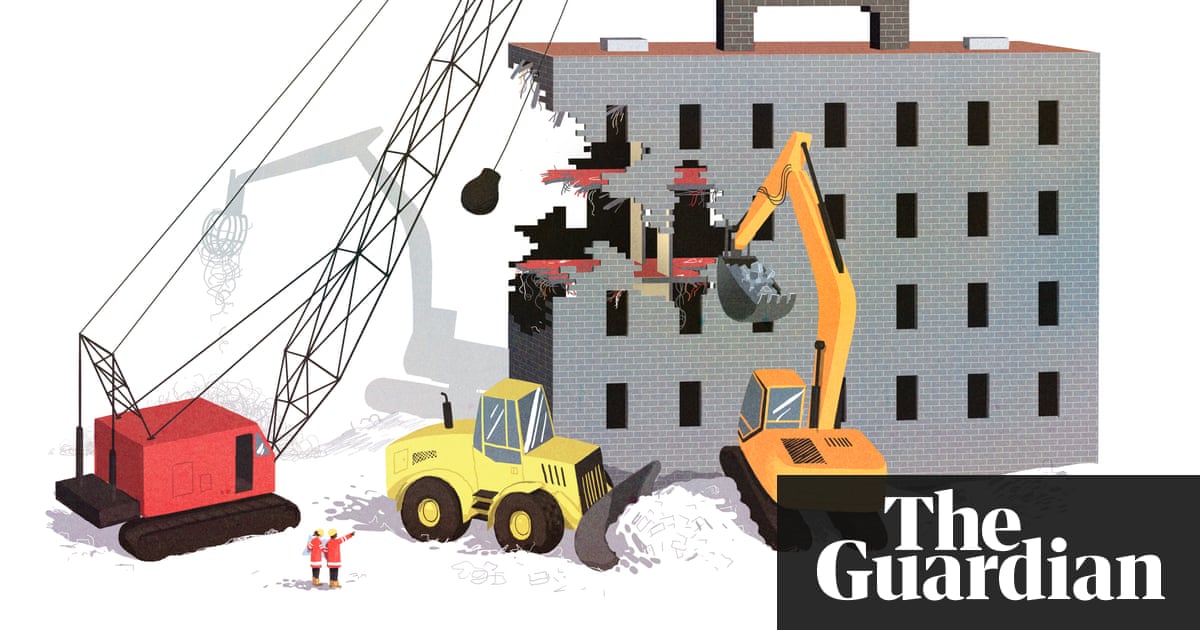
Bulldoze the business school
Having taught in business schools for 20 years, I have come to believe that the best solution to these problems is to shut down business schools altogether. This is not a typical view among my colleagues. Even so, it is remarkable just how much criticism of business schools over the past decade has come from inside the schools themselves.
Read More

Against metrics: how measuring performance by numbers backfires
More and more companies, government agencies, educational institutions and philanthropic organisations are today in the grip of a new phenomenon. I’ve termed it ‘metric fixation’. The key components of metric fixation are the belief that it is possible – and desirable – to replace professional judgment (acquired through personal experience and talent) with numerical indicators of comparative performance based upon standardised data (metrics); and that the best way to motivate people within these organisations is by attaching rewards and penalties to their measured performance.
Read More


The Quest for the Next Billion-Dollar Color
Mas Subramanian, the biggest celebrity in the uncelebrated world of pigment research, glances at a cluster of widemouthed jars containing powders in every color of the rainbow, save one. He’s got OYGBIV. “We’re getting closer,” he says brightly.
Read More

Japan team maps ‘semi-infinite’ trove of rare earth elements
The deposit, found within Japan’s exclusive economic zone waters, contains more than 16 million tons of the elements needed to build high-tech products ranging from mobile phones to electric vehicles, according to the study, released Tuesday in the journal Scientific Reports.
Read More


ACE Submarine Cable Cut Impacts Ten Countries
The ACE (African Coast to Europe) submarine cable runs along the west coast of Africa between France and South Africa, connecting 22 countries. It extends over 17,000 km, and has a potential capacity of 5.12 Tbps. The cable system is managed by a consortium of 19 telecommunications operators & administrations, and the first phase entered service in December 2012.
Read More
Introducing Stripe Billing
Today, we’re excited to launch Stripe Billing, a new suite of tools to help companies of all sizes automate, optimize, and scale recurring business models. This new product is an evolution of Stripe Subscriptions and adds many new features.
Read More
How warehouses for personal junk became a $38B industry
One in 11 Americans pays an average of $91.14 per month to use self-storage, finding a place for the material overflow of the American dream. According to SpareFoot, a company that tracks the self-storage industry, the United States boasts more than 50,000 facilities and roughly 2.311 billion square feet of rentable space. In other words, the volume of self-storage units in the country could fill the Hoover Dam with old clothing, skis, and keepsakes more than 26 times.
Read More


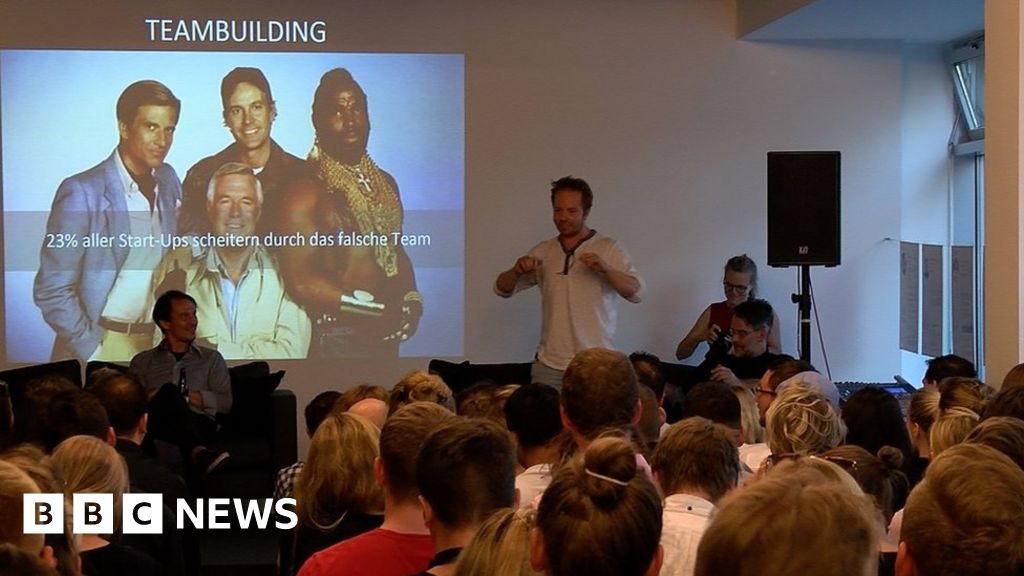
The German entrepreneurs celebrating their mistakes
The Berlin-born business owner is addressing an unusual audience – young techies gathered on a Thursday night to celebrate catastrophe. With the help of an amusing slideshow, featuring wisdom from TV’s The A-Team, Max tells the tale of multiple blunders made in the early days of his events company, Holi Concept, which runs festivals and races in cities across Europe. ‘In the last four or five years, I think I made 20 or 25 hard mistakes,’ he says, barely suppressing a cheeky grin.
Read More
We Need Breakthrough Business Models, Not Breakthrough Technology
When humanity encounters a shiny new technology and senses its potential, we usually glibly assume that the world will instantaneously jump aboard and surf the resulting wave of change.
Read More
A Framework for Building Artificial Intelligence Capabilities
AI will likely become the most important technology of our era as it’s improved upon over time, but we’re still in the early stages of deployment, CIO Journal Columnist Irving Wladawsky-Berger writes. History shows that even after technologies start crossing over into mainstream markets, it takes considerable time for the new tech to be widely embraced across the economy.
Read More