
Growing Anomalies at the Large Hadron Collider Raise Hopes
Recent measurements of particles called B mesons deviate from predictions. Alone, each oddity looks like a fluke, but their collective drift is more suggestive. Computer reconstruction of a collision event in the Large Hadron Collider beauty experiment.
Read More
Even Physicists Don’t Understand Quantum Mechanics
Quantum mechanics, assembled gradually by a group of brilliant minds over the first decades of the 20th century, is an incredibly successful theory. We need it to account for how atoms decay, why stars shine, how transistors and lasers work and, for that matter, why tables and chairs are solid rather than immediately collapsing onto the floor. Scientists can use quantum mechanics with perfect confidence.
Read More
Physicists finally calculated where the proton’s mass comes from
A proton’s mass is more just than the sum of its parts. And now scientists know just what accounts for the subatomic particle’s heft. Protons are made up of even smaller particles called quarks, so you might expect that simply adding up the quarks’ masses should give you the proton’s mass.
Read More

Universal Quantum Phenomenon Found in Superconductors
A ubiquitous quantum phenomenon has been detected in a large class of superconducting materials, fueling a growing belief among physicists that an unknown organizing principle governs the collective behavior of particles and determines how they spread energy and information. Understanding this organizing principle could be a key into “quantum strangeness at its deepest level,” said Subir Sachdev, a theorist at Harvard University who was not involved with the new experiments. The findings, reported today inNature Physicsby a team working at the University of Sherbrooke in Canada and the National Laboratory for Intense Magnetic Fields (LNCMI) in France, indicate that electrons inside a variety of ceramic crystals called “cuprates” seem to dissipate energy as quickly as possible, apparently bumping up against a fundamental quantum speed limit.
Read More
“Schrödinger’s Bacterium” Could Be a Quantum Biology Milestone
The quantum world is a weird one. In theory and to some extent in practice its tenets demand that a particle can appear to be in two places at once—a paradoxical phenomenon known as superposition—and that two particles can become “entangled,” sharing information across arbitrarily large distances through some still-unknown mechanism. Perhaps the most famous example of quantum weirdness is Schrödinger’s cat, a thought experiment devised by Erwin Schrödinger in 1935.
Read More



Swarming Bacteria Create an “Impossible” Superfluid
Researchers explore a loophole that extracts useful energy from a fluid’s seemingly random motion. The secret? Sugar and asymmetry.
Read More
Evidence Found for a New Fundamental Particle
An experiment at the Fermi National Accelerator Laboratory near Chicago has detected far more electron neutrinos than predicted — a possible harbinger of a revolutionary new elementary particle called the sterile neutrino, though many physicists remain skeptical. Inside the MiniBooNE tank, photodetectors capture the light created when a neutrino interacts with an atomic nucleus. Physicists are both thrilled and baffled by a new report from a neutrino experiment at Fermi National Accelerator Laboratory near Chicago.
Read More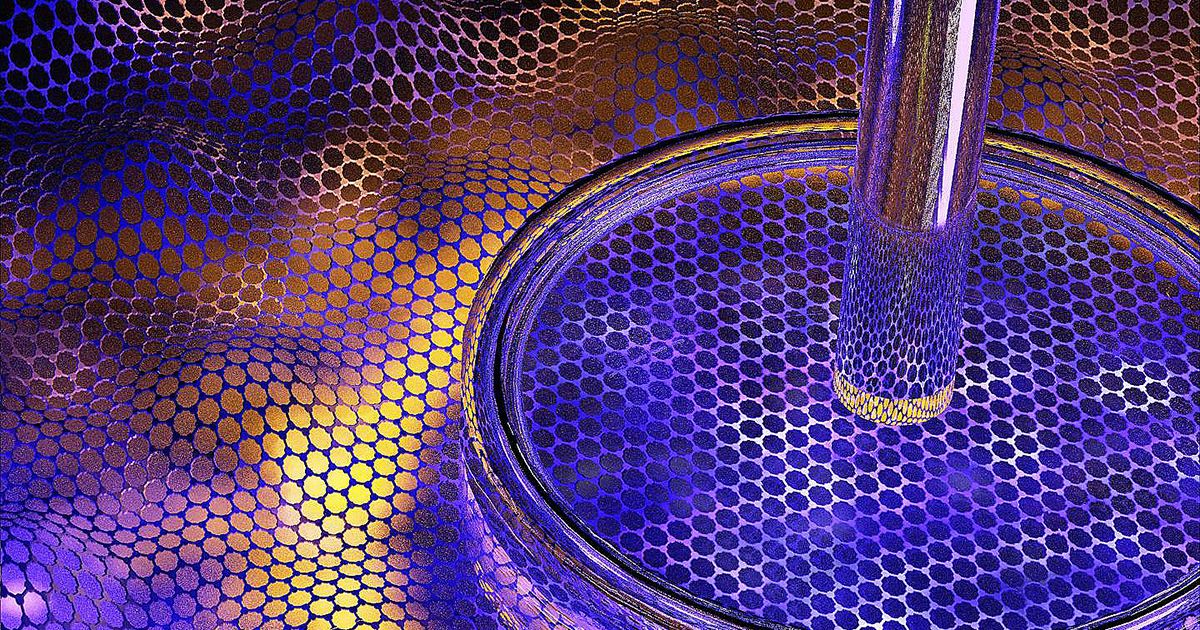
Engineered Band Gap Pushes Graphene Closer to Displacing Silicon
A new method for engineering a band gap into graphene maintains its attractive electronic properties Graphene might bethe best conductor of electrons we know. However, as a pure conductor it can’t stop the flow of electrons like a semiconductor such as siliconcan. Silicon’s ability to create an on/off state for the flow of electrons makes it possible to create the “0” and “1” of binary digital logic for computing.
Read More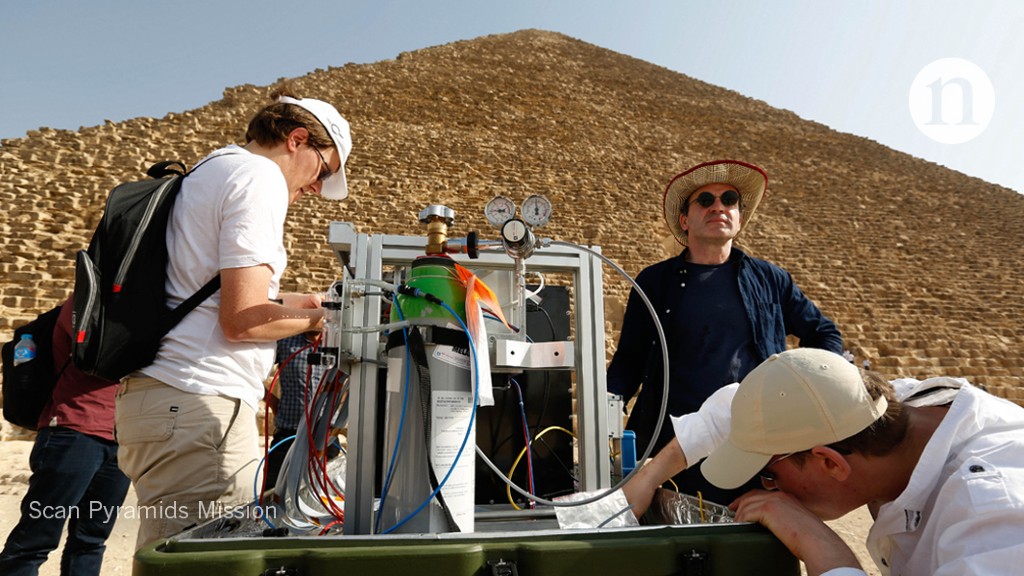
Muons: the little-known particles helping to probe the impenetrable
The muon is going mainstream. The particle, a heavy version of the electron that rains down on every square centimetre of Earth, is little known outside particle physics — and last year it helped archaeologists to make a stunning discovery of a previously unknown chamber in Egypt’s Great Pyramid1. Volcanologists and nuclear engineers are also finding new uses for the same technique, called muography, which harnesses muons to probe the innards of dense structures.
Read More
NASA’s EM-drive is a magnetic WTF-thruster
A group of German scientists has now gotten a reasonable amount of money under the rubric of testing all the things. Basically, because the various space agencies have whispered that no idea is too silly to ignore, we need an effective way to quickly test all the stupid space stuff on the Internet. The Germans are currently building something that is designed to do all that testing.
Read More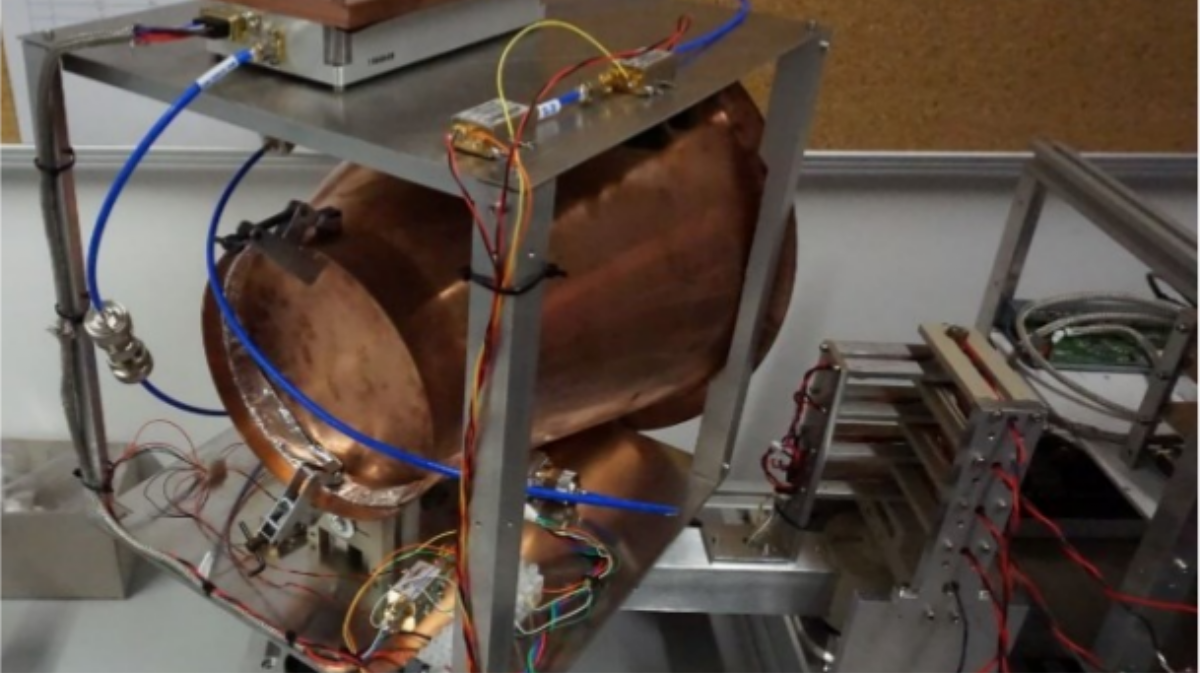

Physics Needs Philosophy. Philosophy Needs Physics
Contrary to claims about the irrelevance of philosophy for science, I argue that philosophy has had, and still has, far more influence on physics than is commonly assumed. I maintain that the current anti-philosophical ideology has had damaging effects on the fertility of science. I also suggest that recent important empirical results, such as the detection of the Higgs particle and gravitational waves, and the failure to detect supersymmetry where many expected to find it, question the validity of certain philosophical assumptions common among theoretical physicists, inviting us to engage in a clearer philosophical reflection on scientific method.
Read More
Mathematicians Disprove Conjecture Made to Save Black Holes
Nearly 40 years after it was proposed, mathematicians have settled one of the most profound questions in the study of general relativity. In a paper posted online last fall, mathematicians Mihalis Dafermos and Jonathan Luk have proven that the strong cosmic censorship conjecture, which concerns the strange inner workings of black holes, is false. The strong cosmic censorship conjecture was proposed in 1979 by the influential physicist Roger Penrose.
Read More

Forget carbon fiber—we can now make carbon nanotube fibers
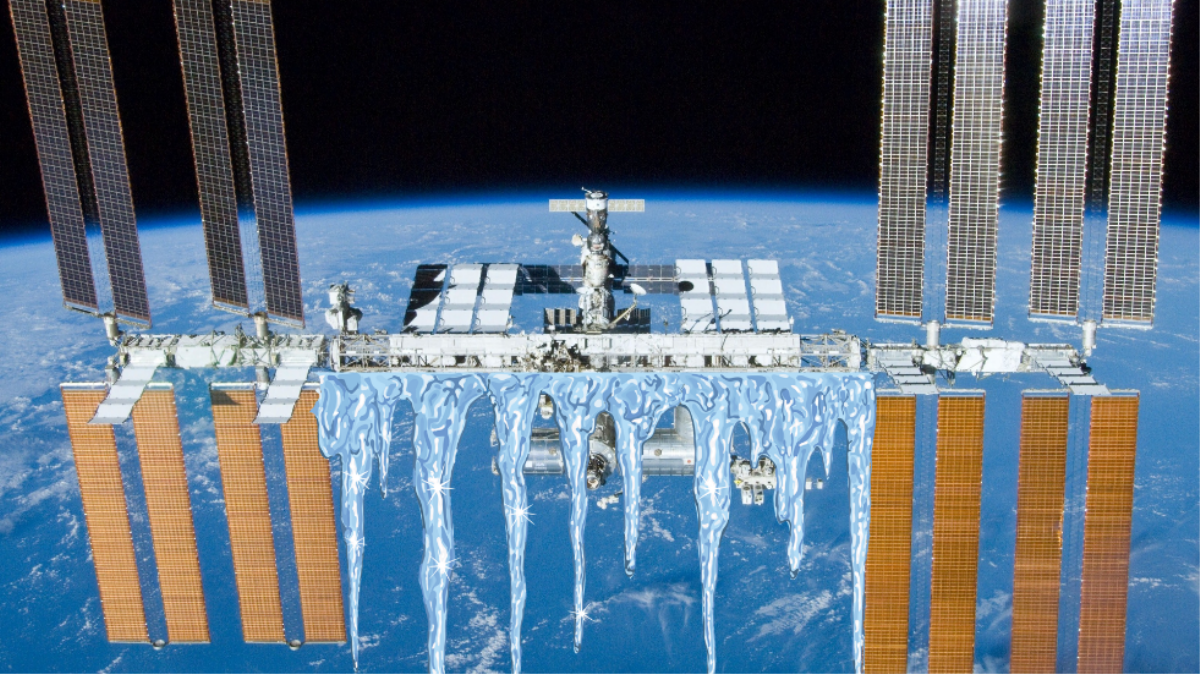
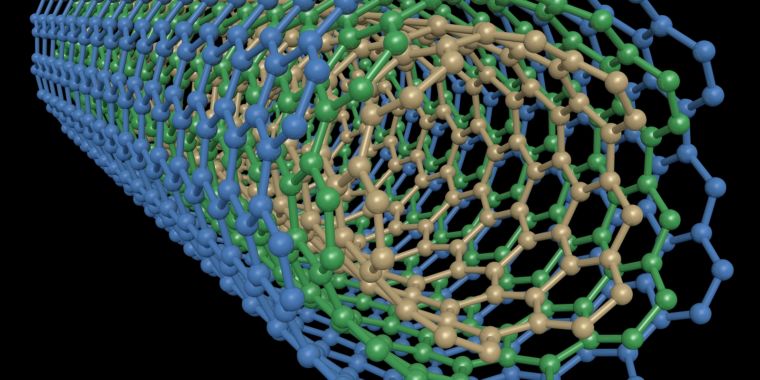
A carbon nanotube is tough—by some measures, more than 30 times more robust than Kevlar. As they’re only a few atoms thick, however, that toughness isn’t especially useful. Attempts have been made to bundle them together, but nothing has worked out especially well; the individual nanotubes are typically short, and it’s difficult to get them to all line up in the same direction.
Read MoreA Chemist Shines Light on a Surprising Prime Number Pattern
About a year ago, the theoretical chemist Salvatore Torquato met with the number theorist Matthew de Courcy-Ireland to explain that he had done something highly unorthodox with prime numbers, those positive integers that are divisible only by 1 and themselves. Torquato told de Courcy-Ireland, a final-year graduate student at Princeton who had been recommended by another mathematician, that a year before, on a hunch, he had performed diffraction on sequences of prime numbers. Hoping to highlight the elusive order in the distribution of the primes, he and his student Ge Zhang had modeled them as a one-dimensional sequence of particles — essentially, little spheres that can scatter light.
Read More
How long can a neutron survive outside an atom?
Neutrons are probably best known for being a chargeless component of the nucleus of all atoms other than hydrogen. In that context, they can be extremely stable—you probably noted the fact that your body wasn’t decaying around you. But pull neutrons out of that context, and they become very unhappy.
Read More
A videogame that powers quantum entanglement experiments
The random number generator Abellan wanted to use? Randos online. His group would design a game that used the 1 and 0 keys on a phone or computer keyboard as controller buttons.
Read More
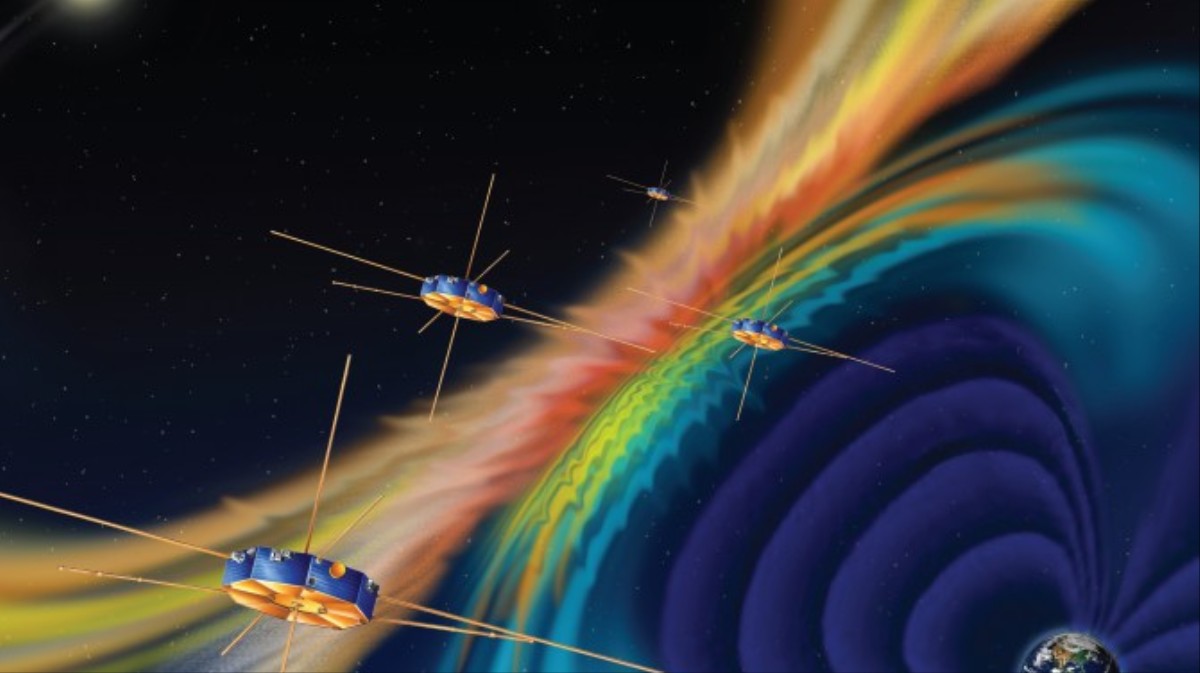
Watch These Trippy NASA Visualizations of Space Magnetism
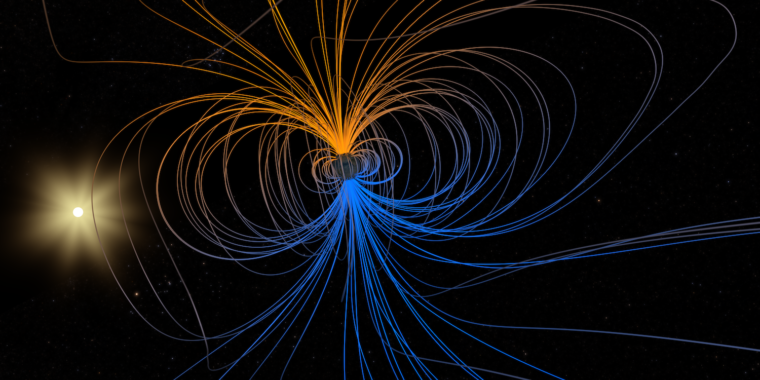
Earth is a giant magnet, and the field that surrounds it, called the magnetosphere, is one of the major reasons life on our planet has been able to flourish. But despite its crucial role in warding off cosmic radiation and atmospheric loss, there’s a lot we don’t know about the magnetosphere. That’s why in March 2015, NASA launched the Magnetospheric Multiscale Mission (MMS), a fleet of four spacecraft, to study its secrets.
Read More

Troubled Times for Alternatives to Einstein’s Theory of Gravity
Zumalacárregui, a theoretical physicist at the Berkeley Center for Cosmological Physics, had been studying how the discovery of a neutron-star collision would affect so-called “alternative” theories of gravity. These theories attempt to overcome what many researchers consider to be two enormous problems with our understanding of the universe. Observations going back decades have shown that the universe appears to be filled with unseen particles — dark matter — as well as an anti-gravitational force called dark energy.
Read More
Yale physicists find signs of a time crystal
Time crystals, first identified in 2016, are different. Their atoms spin periodically, first in one direction and then in another, as a pulsating force is used to flip them. That’s the “ticking.”
Read More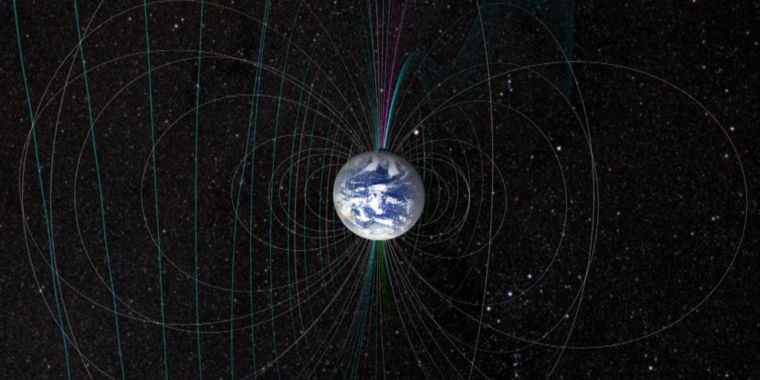
Earth’s magnetic field may not be flipping
Going back millions of years into Earth’s history, our planet’s magnetic field has frequently gone its own way. The magnetic north pole has not only wandered through the north, but it has changed places with the south magnetic pole, taking up residence in the Antarctic. Going back millions of years, there’s a regular pattern of pole exchange, with flips sometimes occurring in relatively rapid succession.
Read More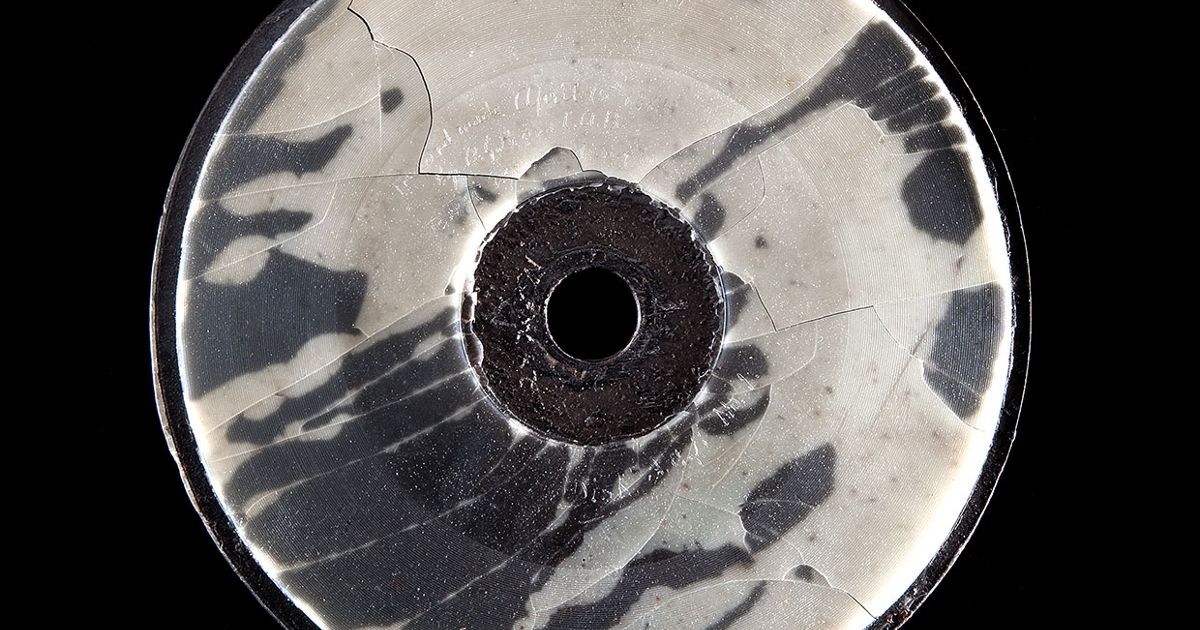
Particle Physics Resurrects Alexander Graham Bell’s Voice
In 1880, Alexander Graham Bell decided to go head-to-head with Thomas Edison. His goal: improving—and commercializing—the phonograph. Bell established the Volta Laboratory in Washington, D.C., using prize money he’d received from the French government for his invention of the telephone.
Read More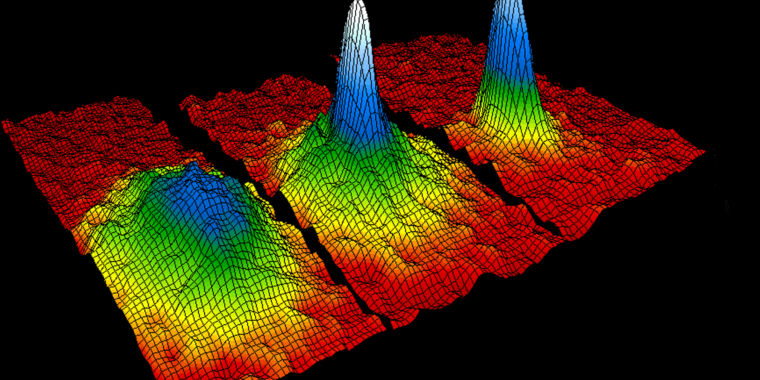
Clouds of atoms, vibrating mirrors show their quantum side
To say the quantum world is unintuitive is a staggering understatement. Particles end up in more than one place at a time, and the instances interact with each other. Decisions made after a photon has traversed an obstacle course determine the path it took through it.
Read More
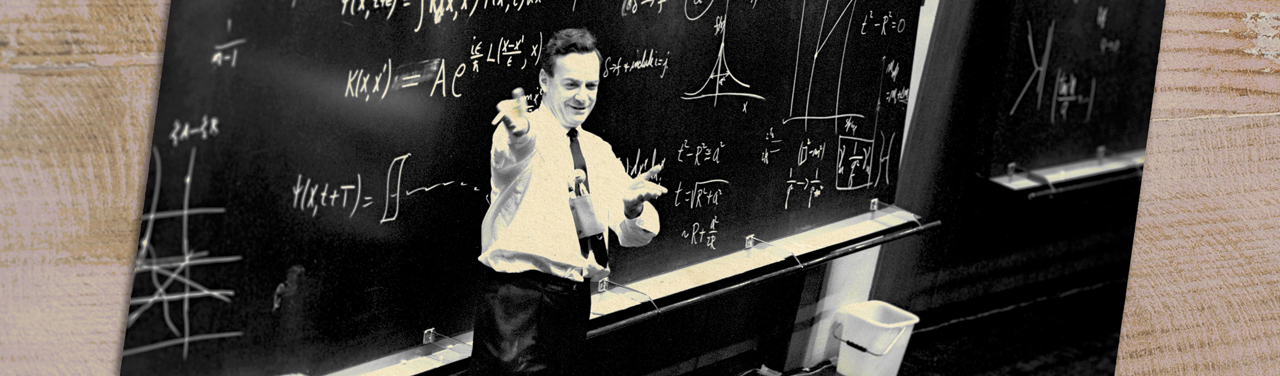
Another Side of Feynman
Yesterday I went for a long walk in the spring sunshine with Trudy Eyges and Richard Feynman. Feynman is the young American professor, half genius and half buffoon, who keeps all physicists and their children amused with his effervescent vitality. He has, however, as I have recently learned, a great deal more to him than that, and you may be interested in his story.
Read More
Why Water Is Weird
It’s striking that water can illustrate and elucidate a martial arts philosophy while also being, to this day, the “least understood material on Earth,” as researchers reported recently.
Read More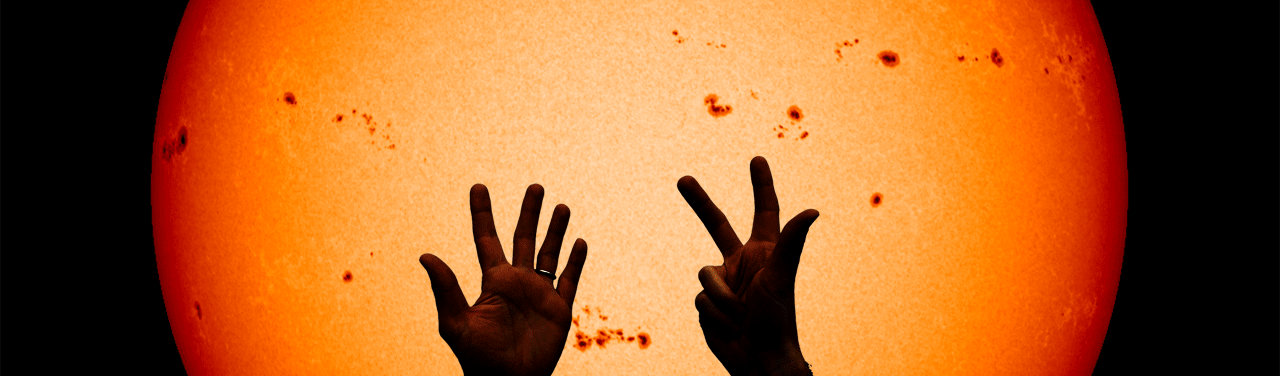
The 315-Year-Old Science Experiment
The most arrogant astronomer in Switzerland in the mid-20th century was a solar physicist named Max Waldmeier. Colleagues were so relieved when he retired in 1980 that they nearly retired the initiative he led as director of the Zurich Observatory. Waldmeier was in charge of a practice that dated back to Galileo and remains one of the longest continuous scientific practice in history: counting sunspots.
Read More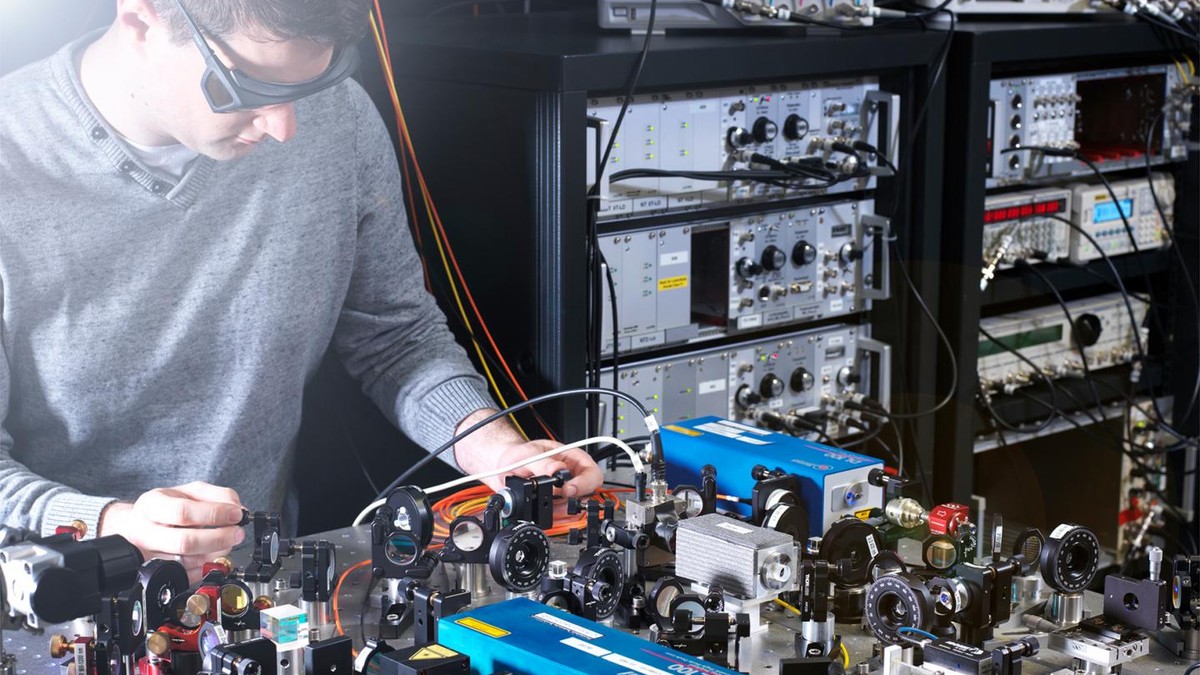
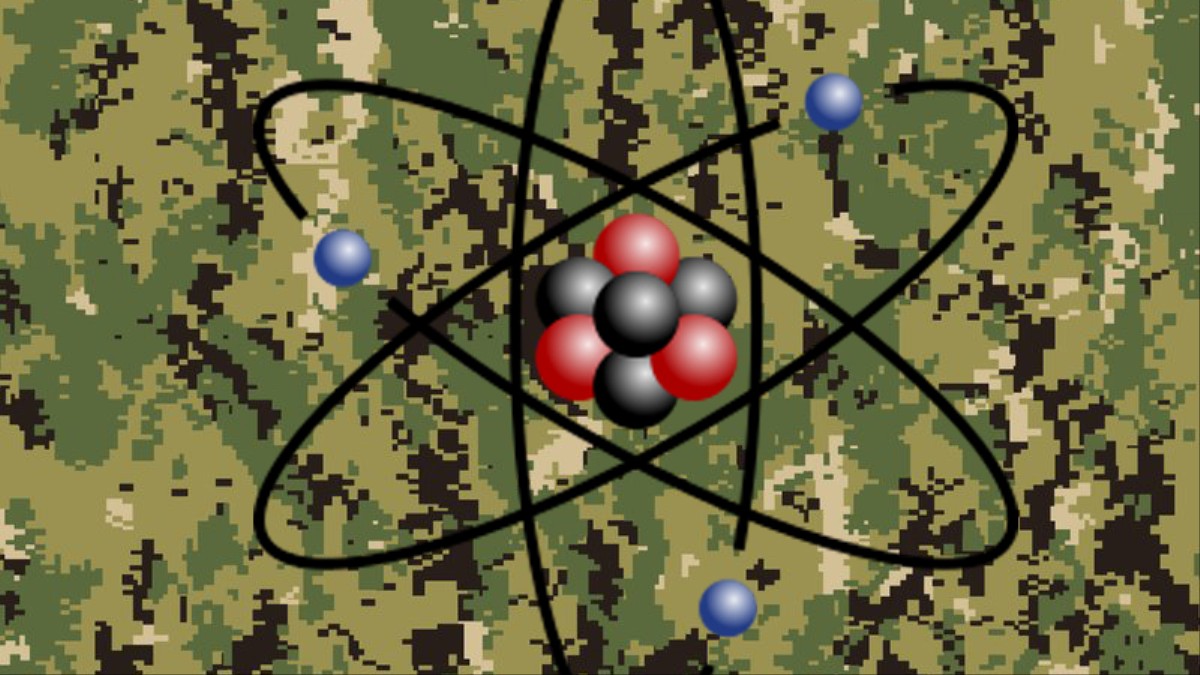
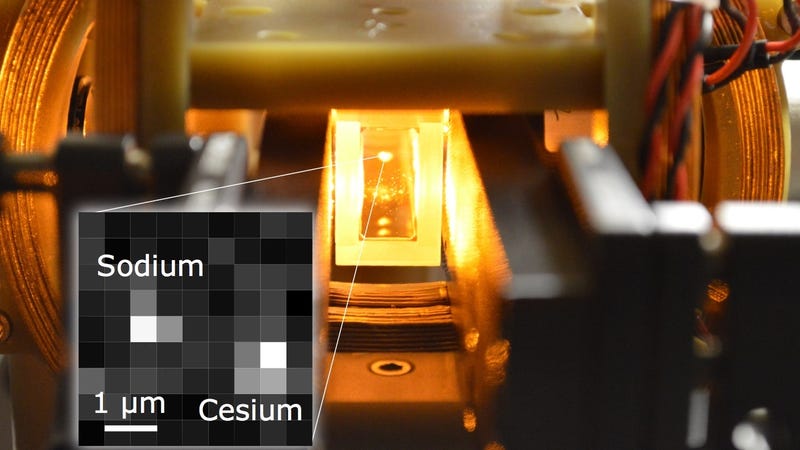
Scientists Make a Molecule by Manipulating Just Two Atoms
The physics here isn’t too hard to understand. Scientists have long been able to push around single atoms within clouds of many atoms. In this case, they used two optical “tweezers” at two specific wavelengths.
Read More


Teaching machines to spot essential information in physical systems
Two physicists at ETH Zurich and the Hebrew University of Jerusalem have developed a novel machine-learning algorithm that analyses large data sets describing a physical system and extract from them the essential information needed to understand the underlying physics.
Read More
We Still Don’t Understand Why Time Only Flows Forward
Every moment that passes finds us traveling from the past to the present and into the future, with time always flowing in the same direction. At no point does it ever appear to either stand still or reverse; the “arrow of time” always points forwards for us. But if we look at the laws of physics—from Newton to Einstein, from Maxwell to Bohr, from Dirac to Feynman—they appear to be time-symmetric.
Read More
Physicists discover new quantum electronic material
MIT, Harvard, and LBNL physicists have discovered a new quantum electronic material, the “kagome metal,” whose atomic structure resembles a Japanese basketweaving pattern and exhibits exotic, quantum behavior.
Read More
DARPA Is Funding Time Crystal Research
You probably scratched your head last year if you read about time crystals, likely 2017’s most esoteric, widely covered popular science story. Even if you understood how they worked, you might not have known what use they could have. Time crystals, systems of atoms that maintain a periodic ticking behavior in the presence of an added electromagnetic pulse, have now piqued the interest of one well-funded government agency: the Department of Defense.
Read More
Dark Matter Is in Our DNA
While some point to galaxy cluster work by Fritz Zwicky in the 1930s, dark matter was truly “discovered” in the 1970s by Vera Rubin, who was studying the rotation of spiral galaxies. Rubin found that galaxies were spinning too fast for the matter we could see in them, yet they weren’t flying apart. Rubin’s work left astronomers with a choice: Either our laws of gravity were wrong, or there was something else out there pulling on the galaxy’s stars and speeding them up while keeping them together.
Read More
To Test Einstein’s Equations, Poke a Black Hole
In November 1915, in a lecture before the Prussian Academy of Sciences, Albert Einstein described an idea that upended humanity’s view of the universe. Rather than accepting the geometry of space and time as fixed, Einstein explained that we actually inhabit a four-dimensional reality called space-time whose form fluctuates in response to matter and energy.
Read More

Will the Quantum Nature of Gravity Finally Be Measured?
In 1935, when both quantum mechanics and Albert Einstein’s general theory of relativity were young, a little-known Soviet physicist named Matvei Bronstein, just 28 himself, made the first detailed study of the problem of reconciling the two in a quantum theory of gravity. This “possible theory of the world as a whole,” as Bronstein called it, would supplant Einstein’s classical description of gravity, which casts it as curves in the space-time continuum, and rewrite it in the same quantum language as the rest of physics.
Read More

Can Many-Worlds Theory Rescue Us From Boltzmann Brains?
Can you trust the world to be consistent? Scientists don’t have much choice. They need to assume that objective observations of the universe can be trusted.
Read More